
Rahul Gandhi accuses the government of using the women's reservation bill as a smokescreen to manipulate India's electoral map and diminish representation for certain states.

The government has released a set of FAQs to address concerns and clarify the details surrounding the Women's Reservation Bill, which aims to provide 33 per cent quota for women in legislatures.

The DMK has been charting an independent course from the Congress-led Opposition bloc on contentious issues during the Monsoon Session, including not joining a walkout over the anti-paper leak bill and participating in a debate on the National Honour Bill, signalling growing fault lines within the Opposition.

Amidst widespread student protests over the NEET paper leak, the Indian government has introduced the Public Examinations (Prevention of Unfair Means) Amendment Bill, 2026, in the Lok Sabha. The bill proposes significantly stricter punishments, including jail terms of up to 10 years and fines of up to Rs 50 lakh for individuals involved in paper leaks, and up to Rs 10 crore for organised crimes, aiming to enhance transparency and fairness in public examinations.

'The BJP has all the instruments with them and they do have a sense of purpose, so I don't think there will be a challenge.'

The Women's Reservation Act 2023, mandating 33 per cent quota for women in legislatures, has been enacted, but its immediate implementation is unclear due to ongoing parliamentary debates and delimitation requirements.
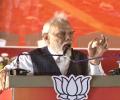
West Bengal Chief Minister Mamata Banerjee has accused the BJP-led central government of using the proposed amendment to the women's quota law as a front for the Delimitation Bill, which she claims will divide the country. She asserted that her party, the TMC, will fight this move at every step.

Monday's proceedings demonstrated that the legislative debate has become inseparable from the broader political crisis surrounding the NEET controversy.

India is set to introduce a new amendment to its anti-paper leak law in the Lok Sabha, aiming to establish fast-track courts across all states and union territories for swift trials and significantly harsher penalties for exam malpractices, including jail terms of 5 to 10 years and fines up to Rs 50 lakh for individuals, and up to Rs 10 crore for organised crimes.

The Rajya Sabha has passed the Prevention of Insults to National Honour (Amendment) Bill, 2026, making insult to the national song 'Vande Mataram' a criminal offence. The bill, which also covers other national symbols, was passed amidst protests from opposition parties regarding the NEET paper leak. Union Minister Nityanand Rai criticised the opposition's stance, emphasising the song's historical significance and its role in national unity.

Amid renewed speculation about political realignments and a potential merger, senior leaders from two Nationalist Congress Party (NCP) factions met Maharashtra Chief Minister Devendra Fadnavis. NCP (SP) working president Supriya Sule clarified her party's position on the proposed Delimitation Bill, stating that while a uniform 50 per cent increase in seats across states would be hard to oppose, any final decision would be made after discussions within the INDIA bloc.

NDA leaders have defended proposed amendments to the Women's Reservation Act and the Delimitation Bill, 2026, arguing women have waited long enough for reservation, while opposition parties allege the process could undermine India's federal and democratic structure, particularly impacting southern states.

Prime Minister Narendra Modi has announced comprehensive reforms in the education system to combat paper leaks, following the passage of a new anti-paper leak law. He asserted that there would be no leniency for those involved in examination irregularities, highlighting the government's commitment to ensuring fair opportunities for students.

The Monsoon Session of Parliament for 2026 is scheduled from July 20 to August 13, with significant political developments expected following recent assembly poll results and internal party rebellions. The session will see the ruling NDA's strengthened position in the Rajya Sabha and potential redrafting of a key Constitution amendment bill.

The Monsoon session of Parliament is expected to begin on July 20 and last for three weeks. Key political developments, including recent election victories and party rebellions, are set to influence the session, alongside the government's redrafting of a significant Constitution amendment bill concerning women's reservation and Lok Sabha seats.

The Indian government plans to introduce a bill in the Rajya Sabha to make obstruction or insult to the national song 'Vande Mataram' a criminal offence. This amendment to the Prevention of Insults to National Honour Act, 1971, aims to grant 'Vande Mataram' the same statutory protection as the national anthem, 'Jana Gana Mana', with penalties up to three years' imprisonment.

As more opposition MPs are now aligning with the ruling NDA, sources in the government indicated that possibilities are being explored to give a fresh push to the delimitation legislation in Parliament.
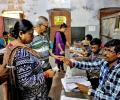
A joint parliamentary committee tasked with examining the 'One Nation One Election' bill has been granted an extension until the end of the Winter session to submit its report. The 41-member committee is reviewing the Constitution (One Hundred and Twenty-Ninth Amendment) Bill, 2024, and is conducting nationwide consultations on implementing simultaneous elections for Lok Sabha, state assemblies, and local bodies by 2029.

More than half of the bills introduced in the 18th Lok Sabha have been passed by both Houses in the same session, a significant acceleration compared to previous terms, raising concerns about the time available for legislative scrutiny and stakeholder consultations.

The meeting comes amid the speculation that the Sharad Pawar led NCP may join the ruling alliance.

The Samyukta Kisan Morcha (SKM) has ended its protest at the Chandigarh-Mohali border after receiving written assurances from the Punjab government. The government has pledged to convene a state Assembly session within a month to address issues concerning river waters, agriculture, and farmer loans, including resolutions against old water agreements and certain central bills.

The Indian government and opposition parties are set for a showdown in Parliament over a Constitution amendment bill concerning the implementation of the women's quota law and the delimitation exercise. The Opposition is concerned about the potential impact of delimitation on the political representation of southern states.

Its strength is set to increase by 3 seats once the current round of Rajya Sabha polls for 27 seats are concluded on June 28.

Lok Sabha takes up FCRA Amendment Bill amid opposition protests.

The Lok Sabha's monsoon session concluded on Thursday, marked by relentless opposition protests over critical issues like the NEET paper leak and police action on students, yet saw the passage of several key bills without extensive debate. Home Minister Amit Shah expressed readiness to debate the student protest issue, urging the speaker to allocate time.

The Lok Sabha is set to expand to 815 seats, with 272 seats reserved for women, according to Union Law Minister Arjun Ram Meghwal. The move aims to implement the women's quota without disadvantaging men or any state. The proposed legislations also include provisions for reservation for women from SC and ST categories within the women's quota.

Congress-ruled states, including Karnataka, Kerala, and Telangana, are preparing to challenge the Mines and Minerals (Development and Regulation) Amendment Act, 2026, in the Supreme Court. They allege the new law undermines states' rights by restricting their powers to levy taxes on mineral resources, a claim the Centre denies, stating it aims for uniform mineral rates.

In a swift political counter-offensive, the Bharatiya Janata Party and its National Democratic Alliance (NDA) partners have announced a massive, nationwide protest campaign targeting the Opposition.

The bill to create a separate Telangana does not require a constitutional amendment and the new state can be carved out by a simple majority in Parliament.

Prime Minister Narendra Modi on Friday expressed concern over the repeated disruptions of parliamentary proceedings, stating that due to the turmoil in the House, the country has been unable to listen to the talented MPs elected in recent times.

Several opposition parties on Wednesday decided to jointly oppose the delimitation provisions in the Constitution amendment bill in Parliament, even as they reiterated support for women's reservation, with Mallikarjun Kharge alleging the move is politically motivated.

Both Houses of Parliament were adjourned sine die, concluding a Budget session marked by the passage of key legislations and the defeat of a Constitution amendment bill on women's reservation. The session saw frequent opposition protests and discussions on various issues, including the West Asia conflict.

Pakistan's parliament on Tuesday overwhelmingly passed two key bills aimed at setting up military courts for the speedy trial of "hardcore terrorists" in the aftermath of the Peshawar school massacre by Taliban.

A bill to implement 33 per cent reservation for women in Lok Sabha and state assemblies by increasing the lower house's strength to 850 is slated for introduction in Parliament. The bill seeks to amend Article 81 of the Constitution and utilise 2011 Census data for redrawing constituencies.

Parliament on Thursday passed a bill to amend the anti-paper leak law to introduce stricter punishments, with the government expressing its commitment to go the extra mile to safeguard the interests of students, who are the country's future.

Tamil Nadu Chief Minister M K Stalin has claimed victory for the state after the Constitution Amendment Bill was defeated in the Lok Sabha. Stalin criticised the Centre's handling of the Women's Reservation Bill and delimitation process, accusing the BJP of prioritising political gain over fairness and consultation.

The Rajya Sabha on Tuesday gave its green light to the Multi-State Cooperative Societies (Amendment) Bill 2023. This Bill introduces significant amendments to the Multi-State Cooperative Societies (MSCS) Act. These modifications aim to enhance the transparency and accountability of these cooperatives' operations in a bid to improve governance.

Farmers under the Samyukta Kisan Morcha have initiated a week-long protest at the Chandigarh-Mohali border, demanding a minimum support price (MSP) based on the C2 plus 50 per cent formula, debt waivers, and opposing the proposed India-US trade deal, Electricity Amendment Bill, and Seed Bill. They also raised concerns about water depletion and sought resolutions based on riparian principles.
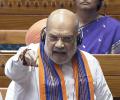
'Anyone they don't like can be potentially arrested and thrown in jail for 30 days to induce regime change.'
West Bengal Chief Minister Mamata Banerjee announced that the TMC will support the women's quota bill but opposes the delimitation bill introduced by the Modi government in the Lok Sabha. She also criticised the central government over central agency raids on TMC candidates.
